Üç Haclı Kilise in Çavuşin, Turkey: History, Architecture, and Visitor Experience

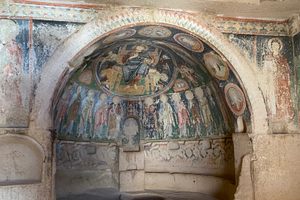
Üç Haclı Kilise, also called Three Crosses Church, is a rock‑cut chapel carved into the cliffs of Çavuşin, Turkey. The structure, dating to the AD 600s, contains 10th‑century frescoes depicting Jesus as ruler of the world and his baptism, and features Latin crosses carved into the ceiling. Visitors reach the site by hiking the red valley and climbing a wooden ladder to view the eroded interior.
Key Takeaways
- Üç Haclı Kilise is carved into rock in Çavuşin, Turkey.
- Its structure dates to the AD 600s; frescoes were painted in the 10th century.
- Frescoes portray Jesus as ruler of the world and his baptism, with Latin crosses in the ceiling.
- Access requires a hike through the red valley and a climb up a wooden ladder.
- Nearby a juice bar provides refreshments for visitors.
| Metric | Value | Why it matters |
|---|---|---|
| Location | Çavuşin, Turkey | Provides geographic context. |
| Construction Era | AD 600s | Indicates early Byzantine period. |
| Fresco Date | 10th century | Shows artistic heritage. |
What Is Üç Haclı Kilise?
Üç Haclı Kilise is a rock‑cut chapel located in the red valley of Çavuşin, Turkey. The name translates to “Three Crosses Church,” reflecting the Latin crosses carved into its ceiling.
The church is thought to have housed a monastic community, though it is heavily eroded today.
Architectural Features and Frescoes
The chapel was carved directly into the cliff face, a technique common in early Byzantine architecture. Its interior walls bear frescoes painted in the 10th century.
The frescoes depict Jesus as ruler of the world and his baptism, offering a rare glimpse into medieval iconography.
Historical Significance
Carved as early as the AD 600s, Üç Haclı Kilise represents one of the earliest surviving examples of rock‑cut churches in the region. Its frescoes, dating to the 10th century, illustrate the continuity of Christian artistic traditions in Anatolia.
Visitor Experience
Reaching the church requires a hike through the red valley, a route that offers panoramic views of the surrounding landscape. A slightly precarious wooden ladder leads to the cave rooms where the frescoes are located.
Visitors must climb a wooden ladder to reach the frescoes, adding an element of adventure to the tour.
Modern Amenities
Adjacent to the church, a juice bar provides refreshments for travelers, making the site a convenient stop for those exploring the area.
Why It Matters
Üç Haclı Kilise offers scholars and tourists alike a tangible link to early Byzantine religious life and artistic expression. Its preserved frescoes and architectural form provide valuable data for historians studying the spread of Christianity in Anatolia. For travelers, the site combines cultural immersion with the thrill of a rugged hike, underscoring the region’s appeal as a destination for adventurous heritage tourism.
Frequently Asked Questions
Where is Üç Haclı Kilise located?
The church sits in the red valley of Çavuşin, Turkey.
When was the church carved?
It was carved as early as the AD 600s.
What do the frescoes depict?
The frescoes show Jesus as ruler of the world and his baptism, with Latin crosses carved into the ceiling.
How can visitors reach the site?
Visitors must hike through the red valley and climb a wooden ladder to access the cave rooms.
Are there any modern facilities nearby?
A juice bar is located next to the church, offering refreshments to visitors.
Bottom Line
Üç Haclı Kilise stands as a remarkable testament to early Byzantine craftsmanship and religious art. Its 10th‑century frescoes, coupled with the adventurous access route, make it a must‑visit for those interested in history, art, and outdoor exploration. The nearby juice bar adds a practical touch, ensuring that the experience is both culturally enriching and comfortably accessible.
For more visual context, see the Atlas Obscura image.
Reporting based on: original source.


Comments
Post a Comment