Red Bull Racing’s Heritage Team Adapts RB8 Formula 1 Car for Madrid Metro Tracks
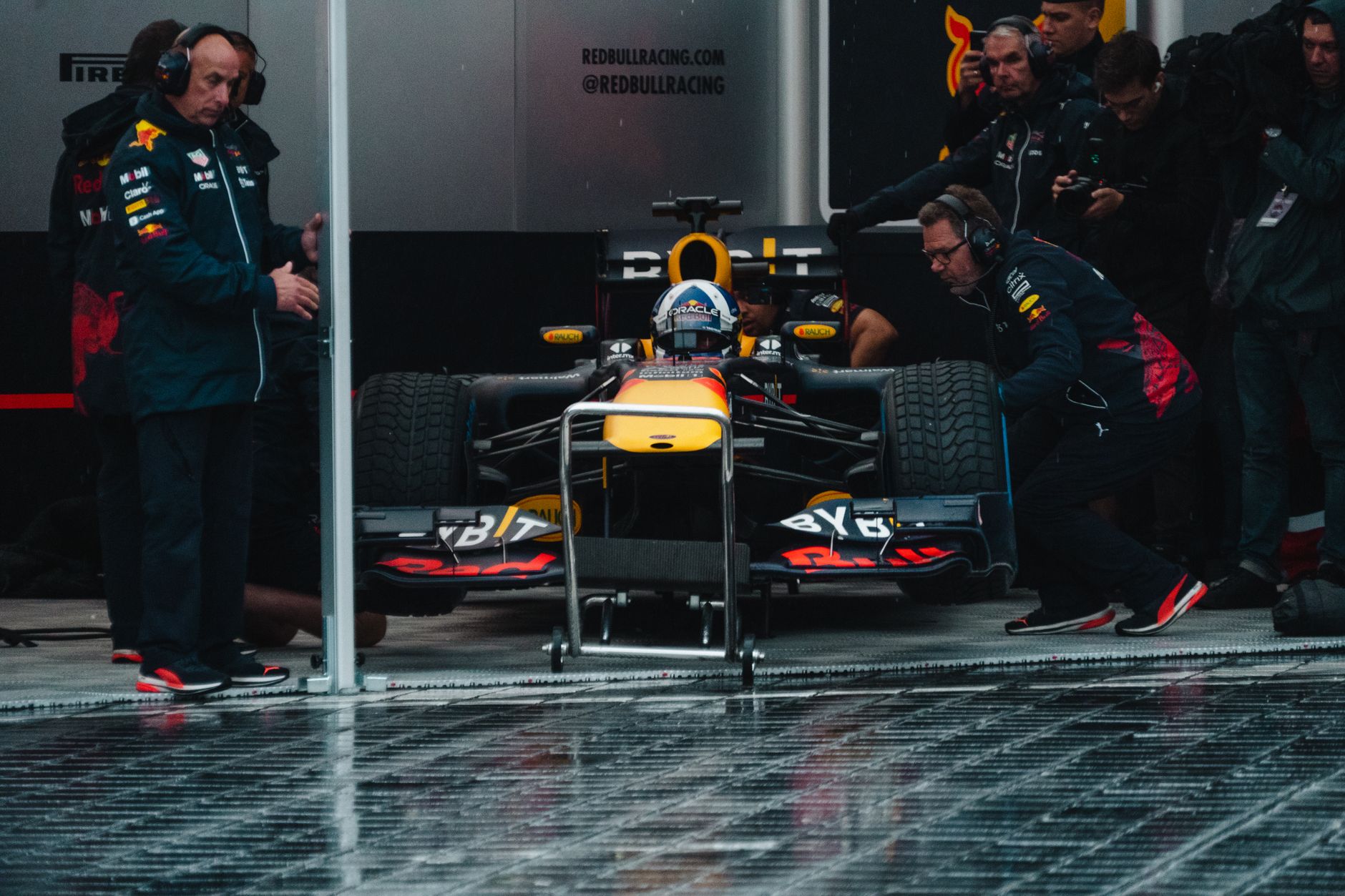
Red Bull Racingf="https://viralpulse-daily.blogspot.com/2026/08/you-wont-believe-players-in-this-racing.html" style="color:#3a7bd5;">Racing’s Heritage Team, together with Spanish engineering collective Andtonic, converted the RB8 Formula 1 car into a vehicle capable of running on Madrid Metro tracks. Custom lightweight metal wheels were engineered to protect the car’s suspension, gearbox, and driveshafts, and former Formula 1 driver Patrick Friesacher piloted the modified RB8 through sections of the closed Madrid Metro network, a track originally used by Sebastian Vettel to win the 2012 Drivers’ Championship.
Key Takeaways
- Red Bull Racing’s Heritage Team and Andtonic adapted an RB8 Formula 1 car for metro tracks.
- Custom metal wheels were designed to keep the car’s critical components safe.
- Patrick Friesacher drove the modified vehicle through the closed Madrid Metro network.
- The RB8 was originally driven by Sebastian Vettel to win the 2012 Drivers’ Championship.
| Metric | Value | Why it matters |
|---|---|---|
| Car | RB8 Formula 1 | Iconic race car used by Sebastian Vettel in 2012. |
| Team | Red Bull Racing’s Heritage Team & Andtonic | Collaborated to engineer the adaptation. |
| Location | Madrid Metro tracks (closed network) | Unique venue for the test drive. |
What Was Adapted?
The RB8, a Formula 1 car that helped Sebastian Vettel secure the 2012 Drivers’ Championship, was modified to operate on the steel rails of Madrid’s underground transit system.
The core change involved installing custom metal wheels that are light enough to preserve the car’s delicate suspension, gearbox, and driveshafts.
Who Made It Happen?
Red Bull Racing’s Heritage Team, known for preserving and showcasing historic race cars, partnered with Spanish engineering collective Andtonic to bring the concept to life.
Patrick Friesacher, a former Formula 1 driver, was selected to drive the adapted RB8 during its test run.
Where Did the Test Take Place?
The modified RB8 was driven through sections of the closed Madrid Metro network, allowing engineers to evaluate performance on a real-world rail system.
The journey also included a route from Milton Keynes to Madrid, demonstrating the car’s versatility across different terrains.
How Was the Adaptation Achieved?
Engineers designed lightweight metal wheels specifically to fit the metro tracks whileef="https://cryptoinsider-hub.blogspot.com/2026/09/consensys-to-split-metamask-into-its.html" style="color:#3a7bd5;">while safeguarding the car’s critical mechanical components.
The adaptation required precise alignment and balance to ensure the vehicle could navigate the tight curves and gradients typical of underground rail lines.
Why Was This Done?
The specific motivation behind the project was not disclosed by the teams involved.
What Does This Mean for Motorsport?
The experiment showcases the flexibility of Formula 1 technology and its potential applications beyond the racetrack.
It also highlightsttps://cryptoinsider-hub.blogspot.com/2026/08/fastest-bitcoin-bull-flip-in-year.html" style="color:#3a7bd5;">highlights the ingenuity of heritage teams in preserving racing history while exploring new frontiers.
Why it Matters
This adaptation demonstrates that high-performance racing machinery can be repurposed for unconventional environments, opening doors for future engineering challenges.
It also provides a unique narrative that blends the worlds of motorsport and public transportation, appealing to enthusiasts and the general public alike.
Frequently Asked Questions
Who was responsible for adapting the RB8?
Red Bull Racing’s Heritage Team collaborated with Spanish engineering collective Andtonic to modify the car.
Which driver piloted the modified vehicle?
Former Formula 1 driver Patrick Friesacher drove the adapted RB8 during its test run.
Where did the car run on the metro tracks?
The car was driven through sections of the closed Madrid Metro network, a venue not normally used for racing vehicles.
What was the original purpose of the RB8?
The RB8 was originally used by Sebastian Vettel to win the 2012 Drivers’ Championship.
Why did the teams choose Madrid Metro tracks?
The specific reasoning was not disclosed, but the closed network offered a controlled environment for testing.
Bottom Line
Red Bull Racing’s Heritage Team and Andtonic successfully transformed an iconic Formula 1 car into a rail‑capable vehicle, proving that racing technology can transcend its traditional boundaries. The project, piloted by Patrick Friesacher, highlights the adaptability of high‑performance engineering and offers a fresh perspective on the intersection of motorsport and public infrastructure.
Reporting based on: original source.


Comments
Post a Comment