The Secret Life of Fruit Flies: How They Chase Invisible Ribbons of Smell
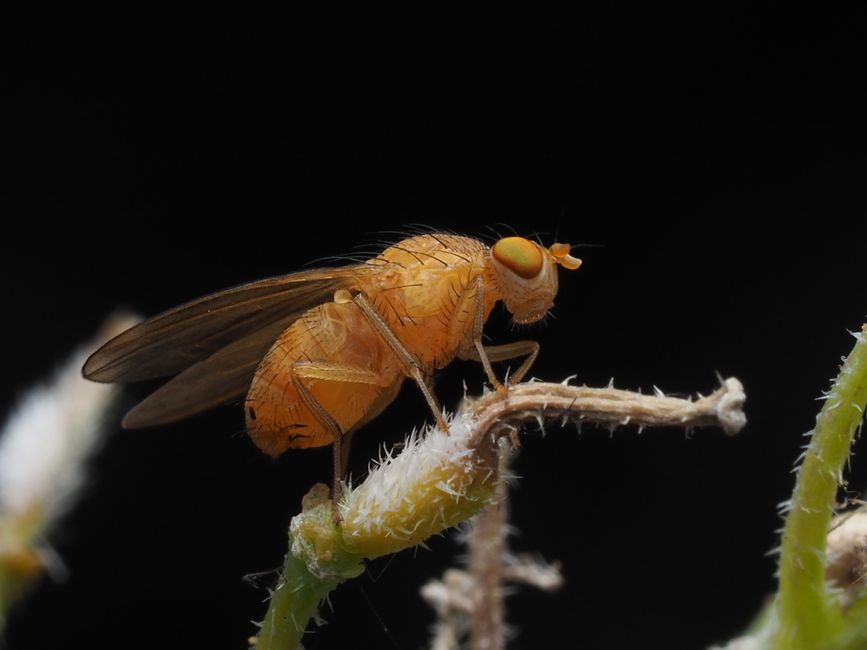
The Power of Smell in Fruit Fly Navigation
Fruit flies use their highly developed sense of smell to navigate through the air and find their target. They can detect even the faintest whiffs of their favorite scents, which are often associated with food and sex. But how do they do it? Researchers have found that fruit flies have specialized sensory organs called sensilla on their antennae, which are responsible for detecting the chemical signals in the air. These sensilla are so sensitive that they can detect the presence of a single molecule of a specific chemical.
The Science Behind Fruit Fly Smell: Fruit flies use a combination of olfactory receptors and glomeruli to process the chemical signals they detect. Olfactory receptors are specialized proteins that bind to specific chemicals in the air, while glomeruli are clusters of neurons that process the signals sent by the olfactory receptors.
Tracking Smells in Turbulent Air
Fruit flies don't just have a keen sense of smell – they also have an impressive ability to track down their targets even in turbulent air. This is made possible by their ability to detect the direction of the chemical signals they detect. Researchers have found that fruit flies use a process called "olfactory tracking" to follow the direction of the smell. This involves using the sensory information from their antennae to create a mental map of the chemical signals in the air.
The Challenges of Tracking Smells: Tracking smells in turbulent air is a complex task that requires a keen sense of direction and sharp memory. Fruit flies use a combination of sensory information and cognitive processing to create a mental map of the chemical signals in the air.
The Importance of Memory in Fruit Fly Navigation
Fruit flies not only have a keen sense of smell but also a remarkable ability to remember the location of their favorite snacks. This is made possible by their ability to form associative memories between the smell of a particular food and its location. Researchers have found that fruit flies use a process called "associative learning" to form these memories. This involves associating the smell of a particular food with its location and then using this information to guide their behavior.
The Power of Associative Learning: Associative learning is a powerful tool that allows fruit flies to form complex memories and navigate their environment with ease. This process involves associating specific sensory information with specific locations and using this information to guide their behavior.
The Role of Visual Cues in Fruit Fly Navigation
While fruit flies rely heavily on their sense of smell to navigate, they also use visual cues to guide their behavior. Researchers have found that fruit flies use visual information to help them locate their target and avoid obstacles. This is made possible by their ability to detect the movement and shape of objects in their environment.
The Importance of Visual Cues: Visual cues play a critical role in fruit fly navigation, helping them to locate their target and avoid obstacles. This is made possible by their ability to detect the movement and shape of objects in their environment.
The Implications of Fruit Fly Navigation for Human Technology
Fruit fly navigation is an impressive example of how simple organisms can develop complex behaviors. The study of fruit fly navigation has implications for human technology, particularly in the development of navigation systems for robots and autonomous vehicles. By understanding how fruit flies navigate, researchers can develop more efficient and effective navigation systems for these devices.
The Future of Navigation Technology: The study of fruit fly navigation has the potential to revolutionize the development of navigation systems for robots and autonomous vehicles. By understanding how fruit flies navigate, researchers can develop more efficient and effective navigation systems for these devices.
Conclusion
In conclusion, the navigation abilities of fruit flies are an impressive example of how simple organisms can develop complex behaviors. By understanding how fruit flies track down their favorite snacks, we can gain insights into the fundamental principles of navigation and develop more efficient and effective navigation systems for human technology.
The Future of Navigation: The study of fruit fly navigation has the potential to revolutionize the development of navigation systems for robots and autonomous vehicles. By understanding how fruit flies navigate, we can develop more efficient and effective navigation systems for these devices.
The Power of Smell: Fruit flies use their highly developed sense of smell to navigate through the air and find their target. This is made possible by their ability to detect even the faintest whiffs of their favorite scents.
JSON-LD NewsArticle schema:


Comments
Post a Comment