MOTHRA Telescope Captures Unprecedented Image of Helix Nebula’s Stellar Bow Shocks
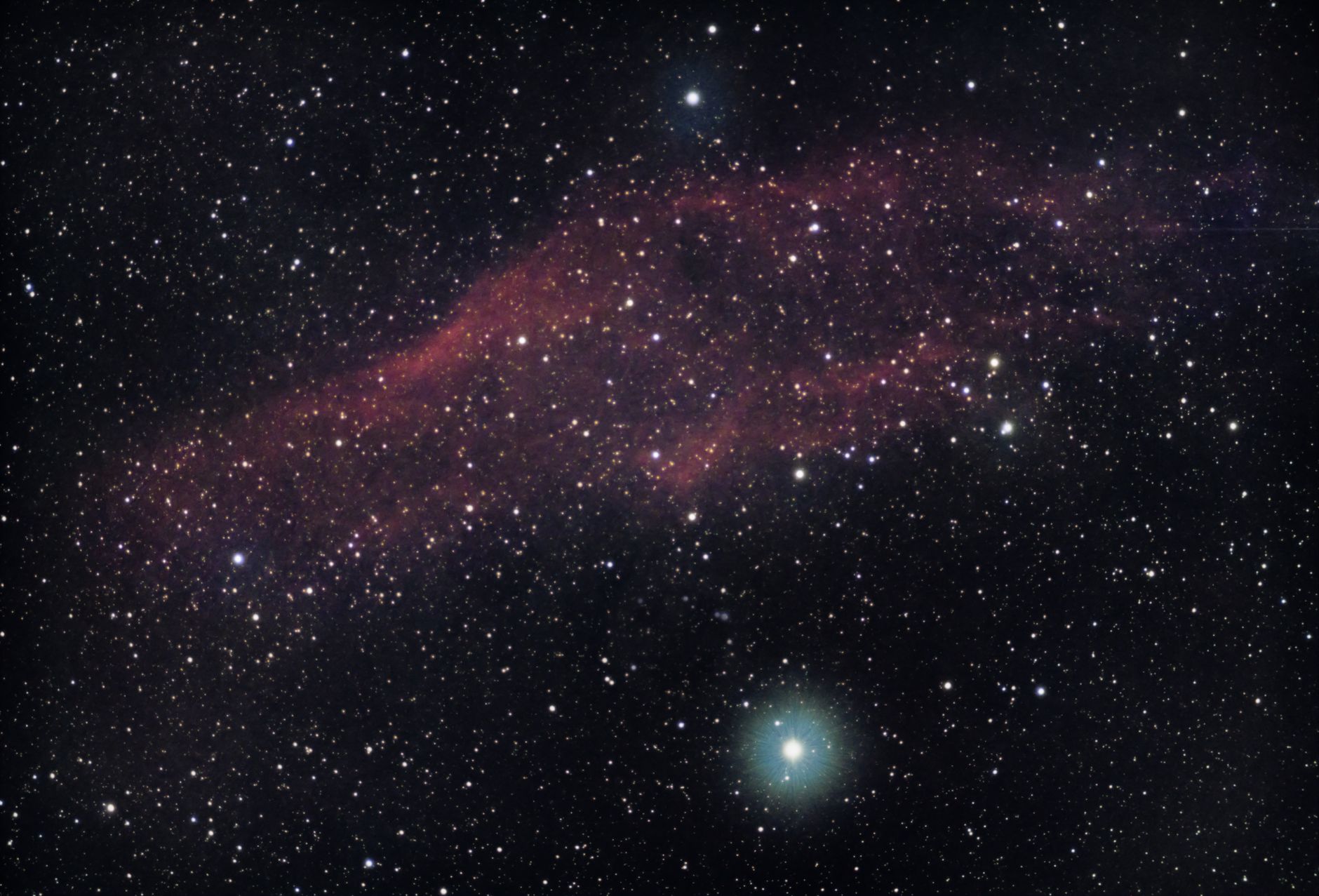
A partially built telescope in the Chilean Andes, the Modular Optical Telephoto Hyperspectral Robotic Array (MOTHRA), captured an unprecedented image of the Helix Nebula, a dying star 650 light‑years away, revealing how its expelled material returns to the galaxy.
Key Takeaways
- MOTHRA, still under construction, used fewer than 200 of its planned 1,140 lenses to image the Helix Nebula.
- The image shows 22 glowing bow‑shock arcs formed by stellar debris moving at ~90,000 mph colliding with interstellar gas.
- Helix Nebula’s motion (~100,000 mph) creates visible bow shocks only on one side of the nebula.
- Clumps of material erode into the interstellar medium over ~10,000 years.
- Researchers plan to complete MOTHRA by the end of the year to study stellar recycling in other systems.
| Metric | Value | Why it matters |
|---|---|---|
| Telescope | MOTHRA (Modular Optical Telephoto Hyperspectral Robotic Array) | First high‑resolution hyperspectral array in the Andes. |
| Observation date | November 2025 (calibration) | Accidental capture of the Helix Nebula. |
| Target | Helix Nebula (NGC 7293, Caldwell 63) | Well‑studied dying star 650 ly away. |
| Bow‑shock arcs | 22 | Direct visual of stellar debris interacting with space. |
| Ejected speed | ~90,000 mph | High velocity creates shock fronts. |
| Nebula speed | ~100,000 mph | Causes one‑sided bow‑shock visibility. |
| Lenses used | <200 of 1,140 planned | Shows potential of full array. |
What is MOTHRA?
MOTHRA is a modular array of high‑end telephoto lenses designed to capture hyperspectral images of faint gas across the sky.
The project plans 1,140 lenses, but the first image used fewer than 200 during a calibration run.
“MOTHRA is so powerful that even when you’re building it, all you have to do is point it at anything, and cool things are going to emerge,” says Roberto Abraham, co‑author and University of Toronto astronomer.
The Accidental Discovery
During a November 2025 calibration, scientists aimed MOTHRA at the Helix Nebula, expecting a routine image of the well‑known structure.
Instead, they captured 22 glowing arcs—bow shocks—on the nebula’s eastern outskirts, a phenomenon rarely seen in such detail.
“We thought we were taking a calibration image of one of the best‑known nebulae in the sky,” says Roberto Abraham. “Instead, we found this extraordinary network of bow‑shaped structures.”
How Bow Shocks Form
Clumps of stellar debris are flung from the Helix Nebula at ~90,000 mph.
These clumps collide with surrounding interstellar gas, creating bow‑shock arcs similar to waves ahead of a moving boat.
The nebula itself travels at ~100,000 mph, which explains why the bow shocks appear only on one side.
Closer arcs, near the nebula’s faint halo, are sharp and well‑defined; farther arcs fade as the material erodes over ~10,000 years.
“The details of the halo shown in the image are impressive,” notes Sun Kwok, UBC astronomer not involved in the work.
Why the Helix Nebula Matters
The Helix Nebula, also known as NGC 7293 or Caldwell 63, is a planetary nebula 650 light‑years from Earth.
Informally called the “Eye of God” or “Eye of Sauron,” it has been extensively studied, making it an ideal target for calibration.
Its halo—a shell of expelled gas—provides context for the observed bow shocks.
Future Prospects with MOTHRA
Once completed by the end of the year, MOTHRA will use its full array and specialized filters to photograph faint gas across vast sky patches.
Researchers aim to understand stellar recycling in other systems, including the Sun, which is expected to die in roughly five billion years.
However, finding similar bow shocks elsewhere may be difficult, as Kazimierz Borkowski, North Carolina State University, notes that the Helix Nebula’s relative speed creates favorable conditions.
“This thing is so stupidly powerful that even when you’re building it, all you have to do is point it at anything, and cool things are going to emerge,” Abraham adds.
Why it Matters
The image provides the first direct visual of how dying stars return enriched material to the galaxy, a key step in the life cycle of stars, planets, and life itself.
It also demonstrates the scientific potential of MOTHRA, hinting at future discoveries that could reshape our understanding of galactic evolution.
Frequently Asked Questions
What is MOTHRA?
MOTHRA is a modular array of high‑end telephoto lenses designed to capture hyperspectral images of faint gas across the sky.
How did the Helix Nebula image happen?
During a calibration run in November 2025, scientists pointed MOTHRA at the Helix Nebula and accidentally captured 22 bow‑shock arcs.
What do the bow shocks reveal?
They show clumps of stellar debris moving at ~90,000 mph colliding with interstellar gas, creating shock fronts that disperse material into space.
Why are bow shocks only on one side of the nebula?
The Helix Nebula itself travels at ~100,000 mph, causing visible shocks only on the side facing its motion.
When will MOTHRA be fully operational?
The project plans to complete the array by the end of the year, using all 1,140 lenses for future observations.
Bottom Line
The accidental capture of 22 bow‑shock arcs around the Helix Nebula by the partially built MOTHRA telescope offers the first vivid glimpse of how dying stars seed the galaxy with new material. The full array, once completed, promises to unlock further secrets of stellar recycling and galactic evolution.
Reporting based on: original source.


Comments
Post a Comment